

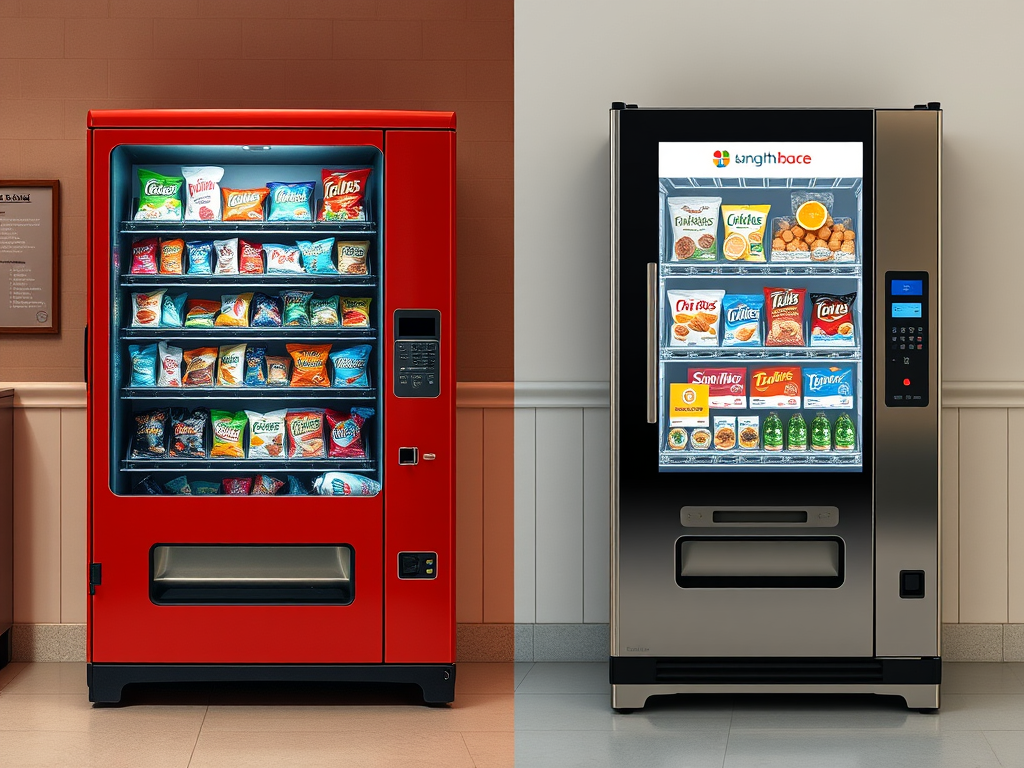
Vending machines are one of those things we rarely think about — until we need one.
They’ve been everywhere: schools, factories, offices, hospitals, gas stations, airports. Yet behind that quiet presence is a wild story of massive growth, painful decline, strange experiments, and a surprising comeback.
Let’s break down how vending machines went boom, bust, bonkers, and ended up helping shape modern retail.

The Boom: When Vending Machines Were Everywhere
There was a time when vending machines felt like the future.
In the mid-1900s, they exploded in popularity. Why? Because they solved a simple problem:
People wanted quick food and drinks without having to wait on anyone.
Factories installed them. Schools relied on them. Office buildings filled hallways with them. Soda, candy, chips — it was all there for a few coins.
Vending machines were:
- Cheap to operate
- Easy to scale
- Always open
For decades, they printed money with minimal effort.
This was retail at its simplest.
The Bust: When Convenience Wasn’t Enough
Then things started to change.
Fast food got faster. Convenience stores got bigger. Coffee shops multiplied. Suddenly, vending machines didn’t feel so… convenient.
Problems piled up:
- Limited choices
- Outdated machines
- Cash-only payments
- Poor maintenance
At the same time, people became more health-conscious. Candy bars and sugary sodas weren’t the default grab anymore.
Vending machines didn’t disappear — but many were ignored.
They became background noise.
The Bonkers Phase: When Vending Machines Got Weird
Instead of fading away quietly, vending machines did something unexpected.
They got… strange.
Around the world, machines started selling:
- Hot meals
- Electronics
- Flowers
- Art
- Pizza
- Even luxury items
Japan famously leaned into vending culture, turning machines into part convenience store, part curiosity.
Some ideas worked. Others didn’t.
But one thing was clear: vending machines were experimenting, trying to stay relevant in a changing world.
The Reinvention: Smart Machines, Smart Retail
Here’s where things get interesting.
Modern vending machines quietly evolved into something else entirely.
Today’s machines can:
- Accept cards and mobile payments.
- Track inventory in real time.
- Change pricing automatically
- Display digital ads
- Offer fresh food and specialty items.
They’re no longer just metal boxes filled with snacks.
They’re mini retail stores powered by data.

Why Vending Machines Matter to Modern Retail
Vending machines didn’t just survive — they influenced how retail works today.
They helped normalize:
- Self-service shopping
- 24/7 access
- Contactless payments
- Automated checkout
Sound familiar?
That’s because these ideas now power:
- Self-checkout lanes
- Smart kiosks
- Automated convenience stores
- Grab-and-go retail experiences
Vending machines were doing this long before it was trendy.
The Future: Not Just Snacks Anymore
The next wave of vending isn’t about chips and soda.
It’s about:
- Micro-markets
- Healthy meals
- Office and apartment solutions
- High-traffic locations with limited staff
Retail is moving toward frictionless experiences, and vending machines fit perfectly into that world.
They’re smaller, more intelligent, and more adaptable than traditional stores.
Final Thoughts
Vending machines didn’t just go through ups and downs — they quietly reshaped how we buy things.
From their explosive rise…
to near irrelevance…
to strange experiments…
to smart retail solutions…
They’ve proven one thing:
Convenience never goes out of style — it just evolves.

One response to “Vending Machine History Uncovered: Surprising Facts”
[…] How Digital Marketing Helps Machine Shops Find More Customers […]